Uber aims to improve carpooling in India for smoother rides.
role
Product Designer
prompt
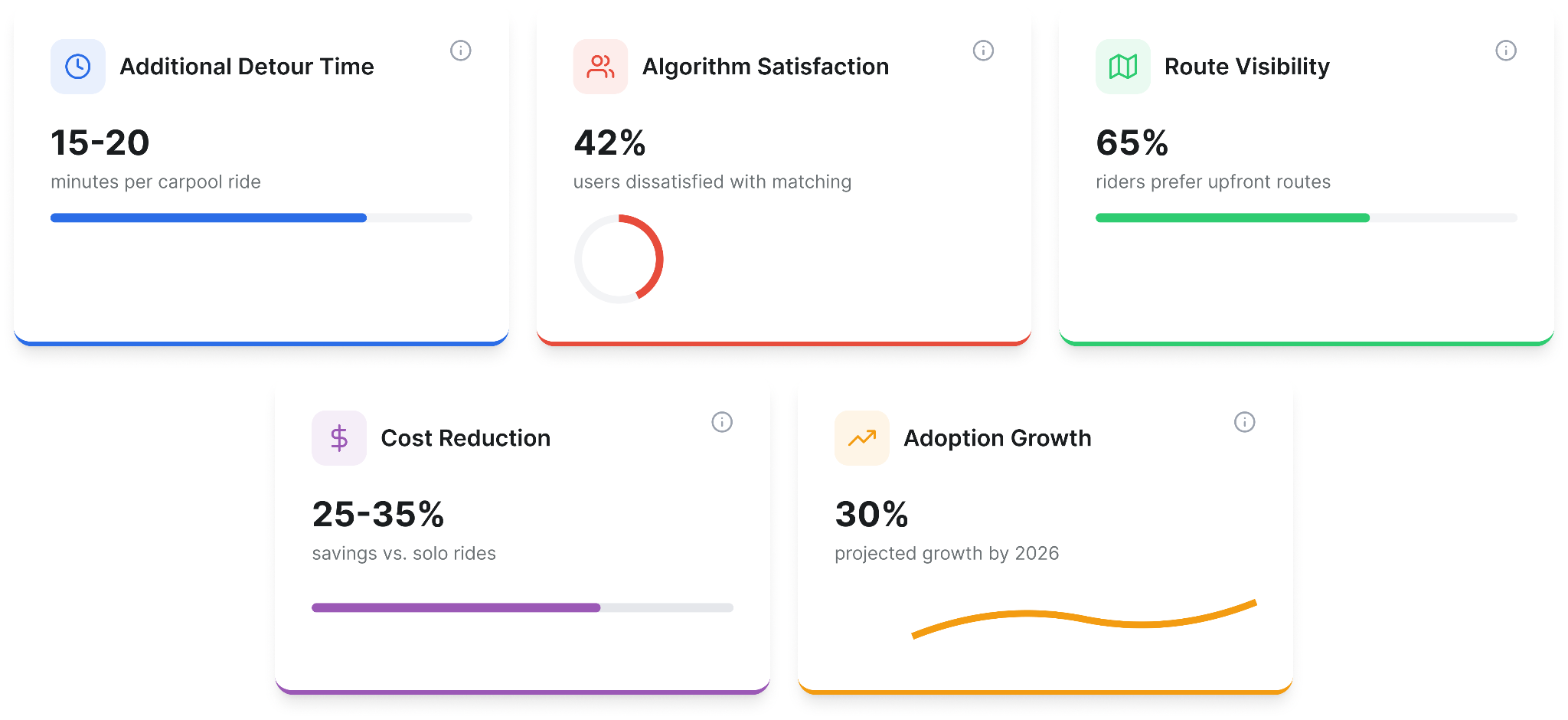
Uber wants to bring back carpooling experience in India. It has been a cost-effective, eco-friendly way for users to share rides, but many users complain about long detours, matching inefficiencies and lack of clarity on the estimated route and co-riders. Task is to redesign the carpooling experience to maximize efficiency and user satisfaction.
CHALLENGE
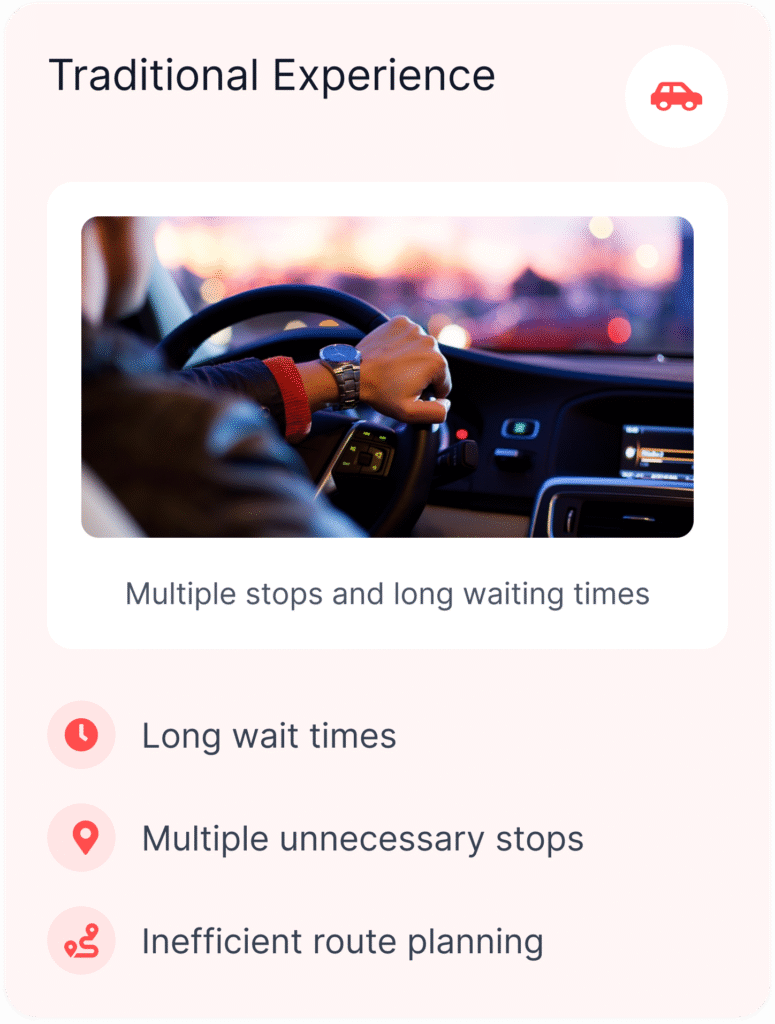
Long Wait Times for Matches
Multiple Unnecessary Stops
Inefficient Route Planning
Poor Passenger Matching
Unpredictable Arrival Times
INITIAL PROBLEM DISCOVERY
USING UBER IN INDIA...
the problem
How might we reduce long wait times and inefficient routes in ride-hailing?
project process
I mainly adopted design thinking process but since I only have 7 days left before the deadline, I didn’t do usability testing for the app.
white paper research
First, before touching anything related to design, I wanted to dive into the motivations behind goal setting.
competitive analysis
I analyzed existing carpooling services to identify what works and how Uber can improve efficiency and rider experience.
OLA
BlaBlaCar
the gap
Ola Share is great for city rides, BlaBlaCar for long trips, and QuickRide for daily commutes. The key gap is better route optimization and co-rider matching.
Feature
OLA
BlaBlaCar
QuickRide
Urban Ride-Sharing
✔
✖
✔
Long-Distance Carpooling
✖
✔
✖
Real-Time Ride Matching
✔
✖
✔
Corporate Tie-Ups
✖
✖
✔
User Verification
✔
✔
✔
Driver Profiles & Reviews
✔
✔
✔
In-App Payment Integration
✔
✔
✔
Ride Scheduling
✔
✔
✔
Route Optimization
✔
✖
✔
Focus on Daily Commutes
✔
✖
✔
Government ID Verification
✔
✔
✔
Official Email Verification
✖
✖
✔
Carpooling Groups
✔
✖
✔
Environmental Impact Tracking
✖
✖
✔
PAIN POINT 1
Lack of real-time ride matching, leading to delays and inconvenience for users.
PAIN POINT 2
Uncertainty about co-riders' profiles and safety concerns, leading to hesitation in using carpooling services.
PAIN POINT 3
Inefficient route optimization, causing longer travel times and higher costs.
PAIN POINT 4
Difficulty in finding reliable carpool partners, leading to inconsistent ride availability.
USER INTERVIEW / PRIMARY RESEARCH
After analyzing the competition and understanding user behavior, I focused on gathering insights from my target audience to tailor the final product to their needs.
Understanding User Needs for an Efficient Uber Carpooling Experience
Can you describe your last carpooling experience? What were the biggest frustrations or challenges you faced?
How do you feel about the current route optimization in carpooling? Have you ever experienced unnecessary detours or delays?
How comfortable do you feel sharing a ride with strangers? What safety features would make you feel more secure?
Do you find carpooling fares predictable and fair? What improvements would help you better understand pricing?
What factors influence your decision to choose carpooling over other ride options? What would make you use it more frequently?
insights & analysis 30+ data points
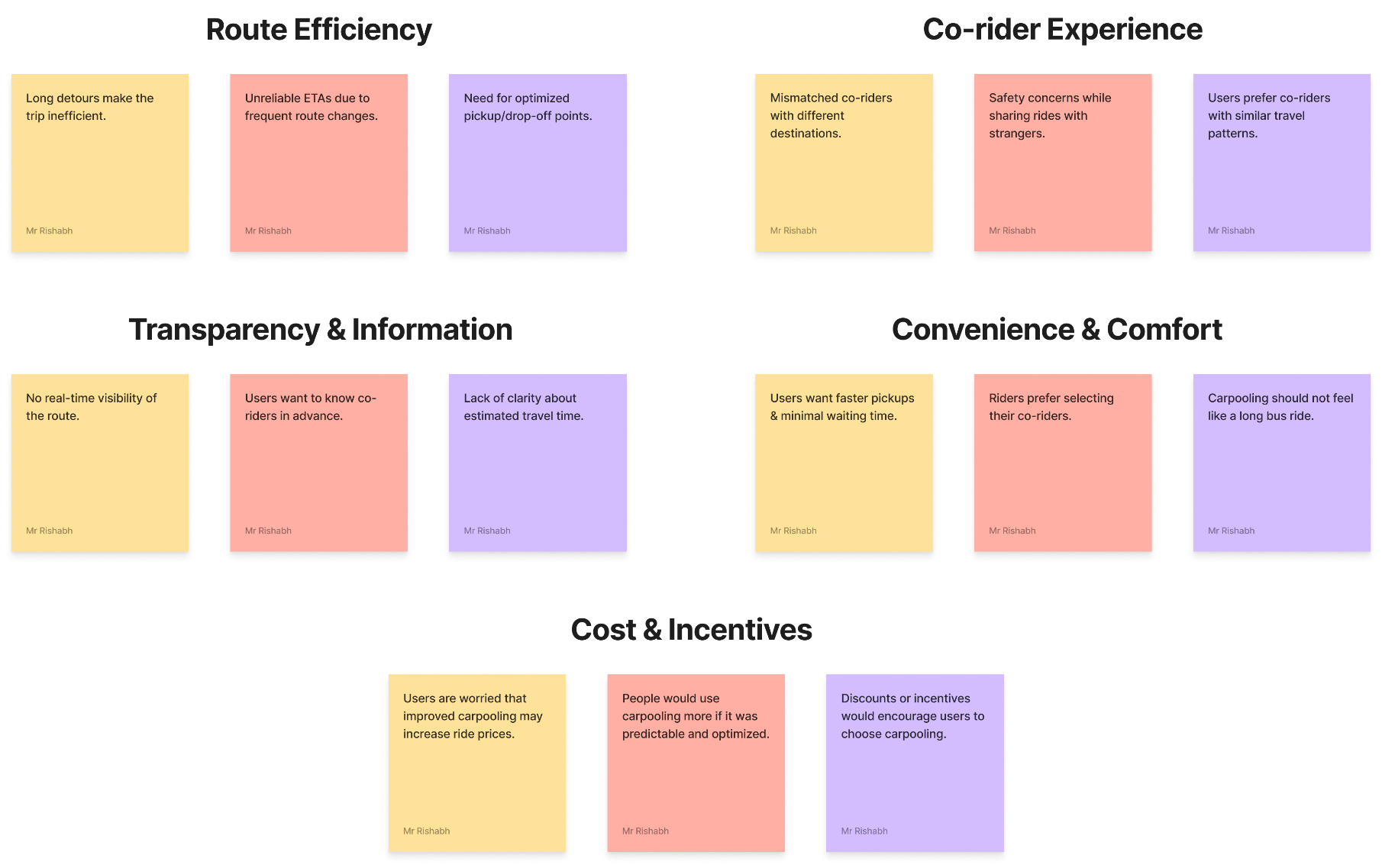
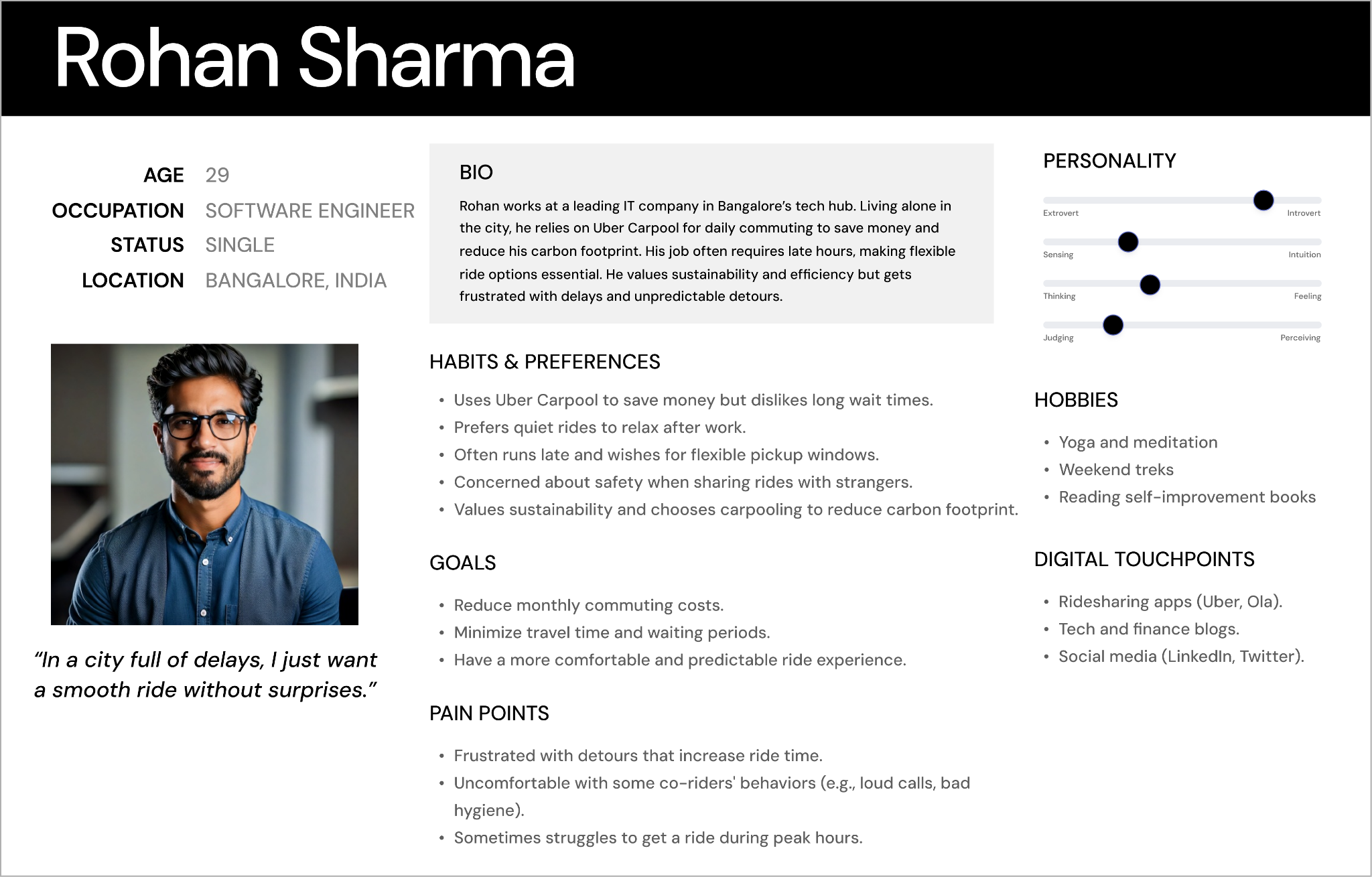
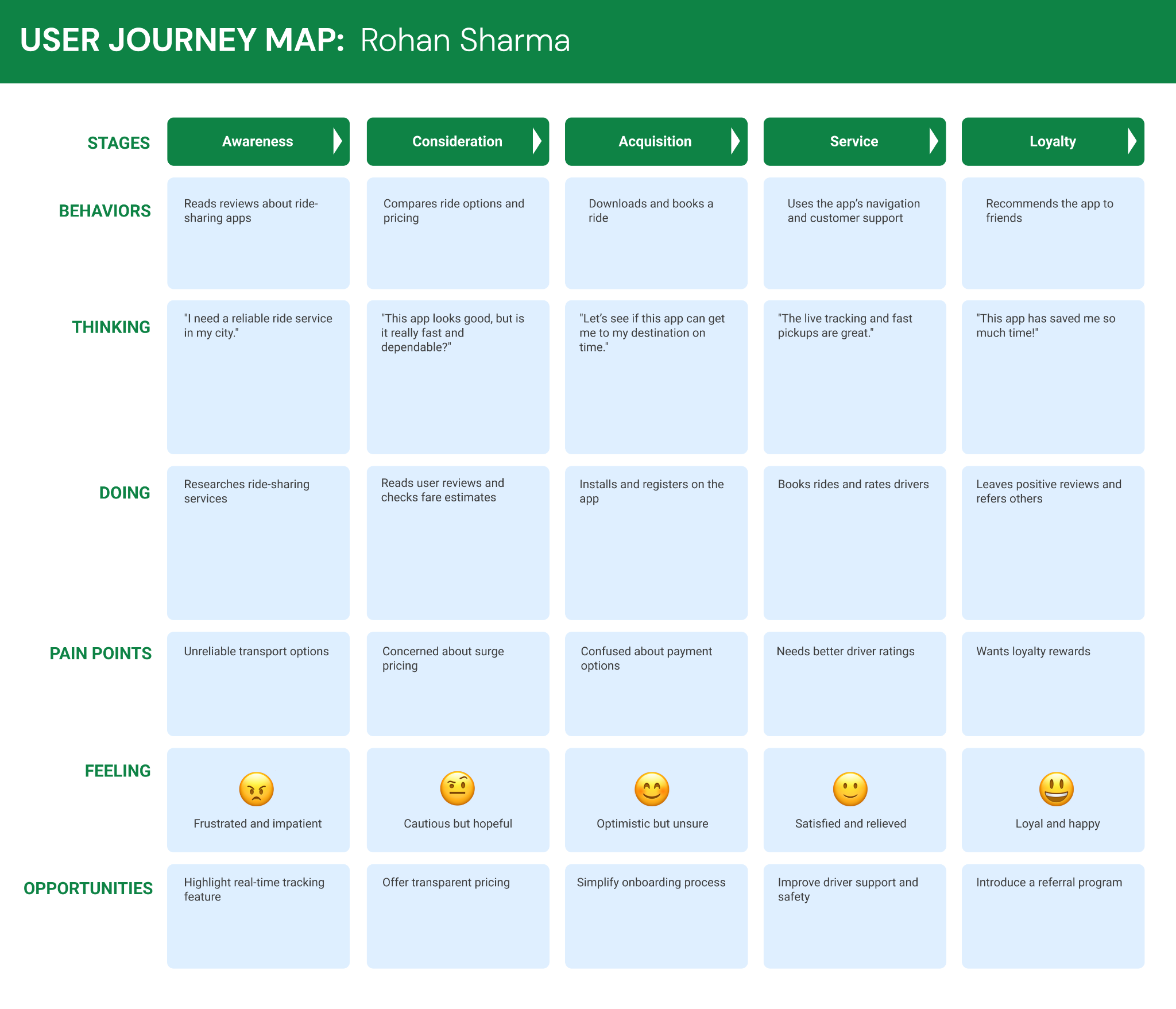
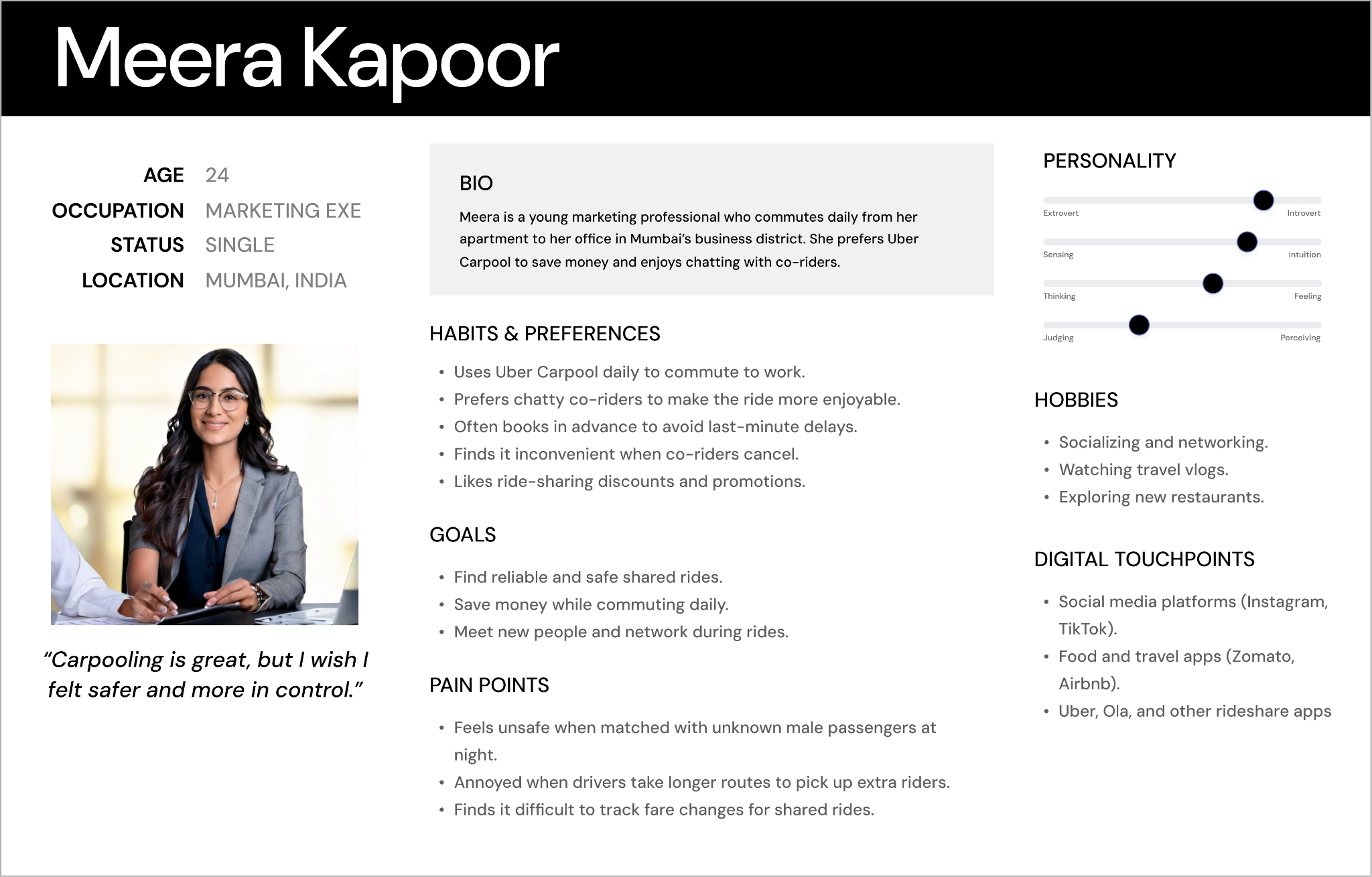
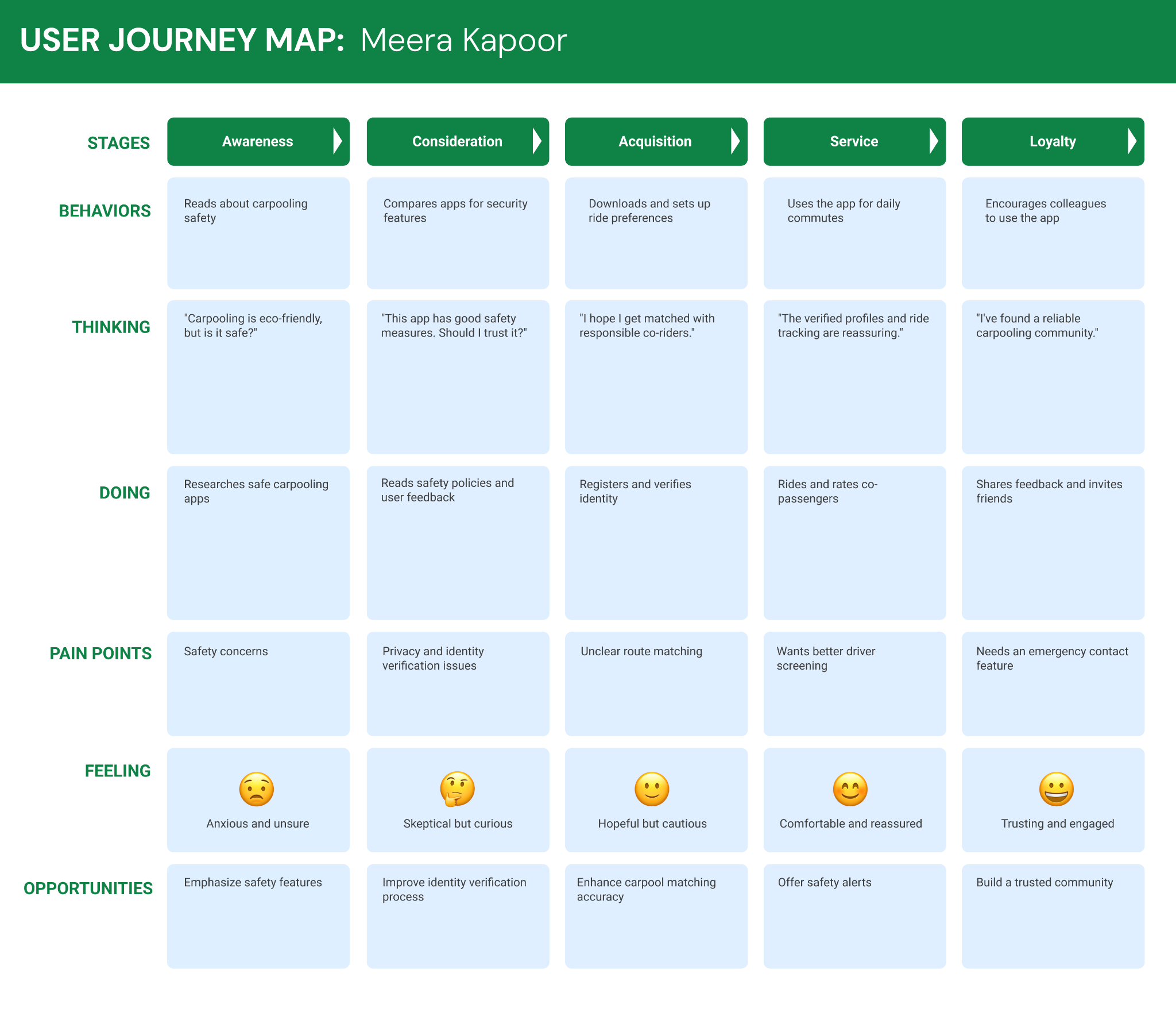
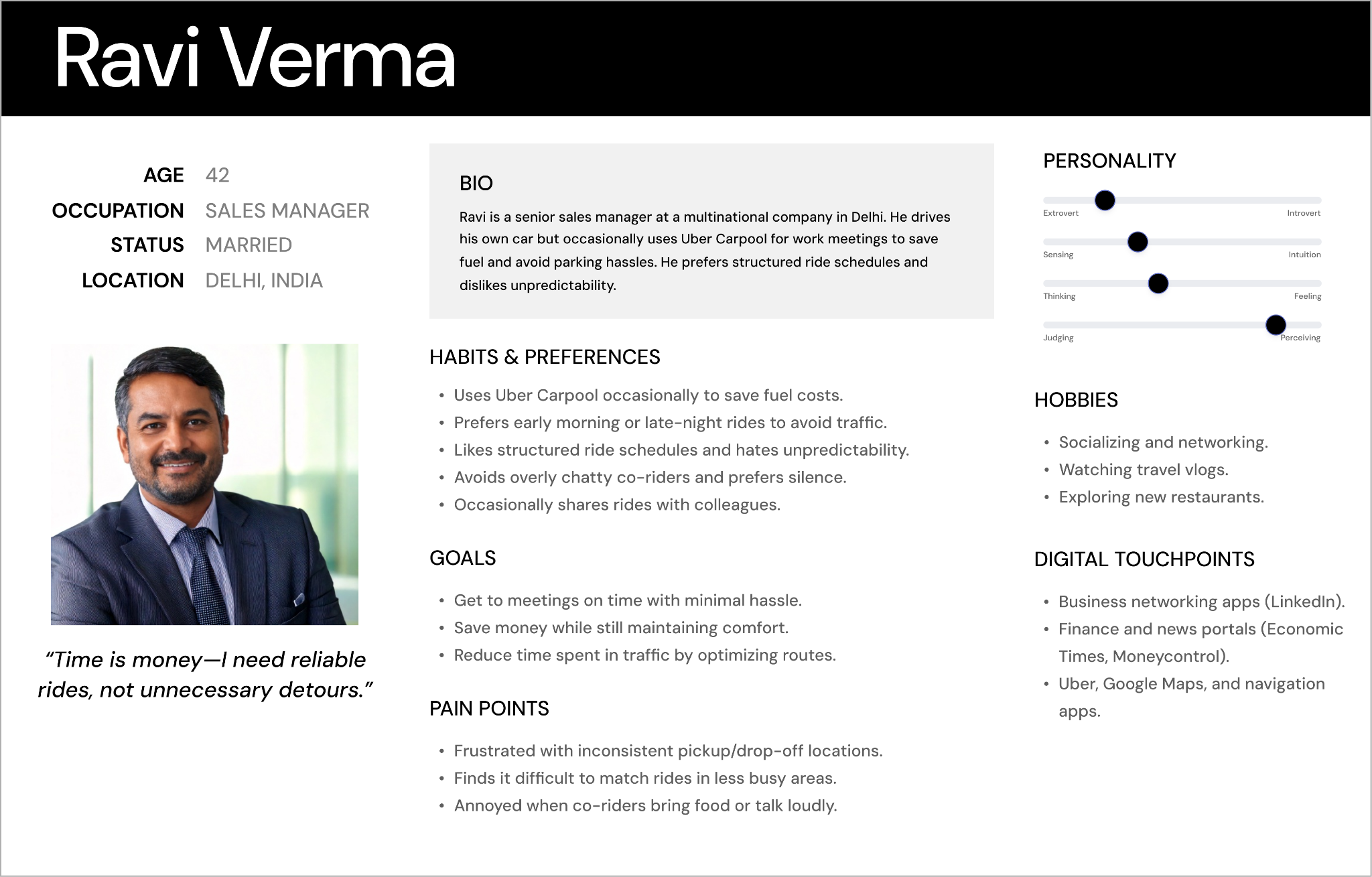
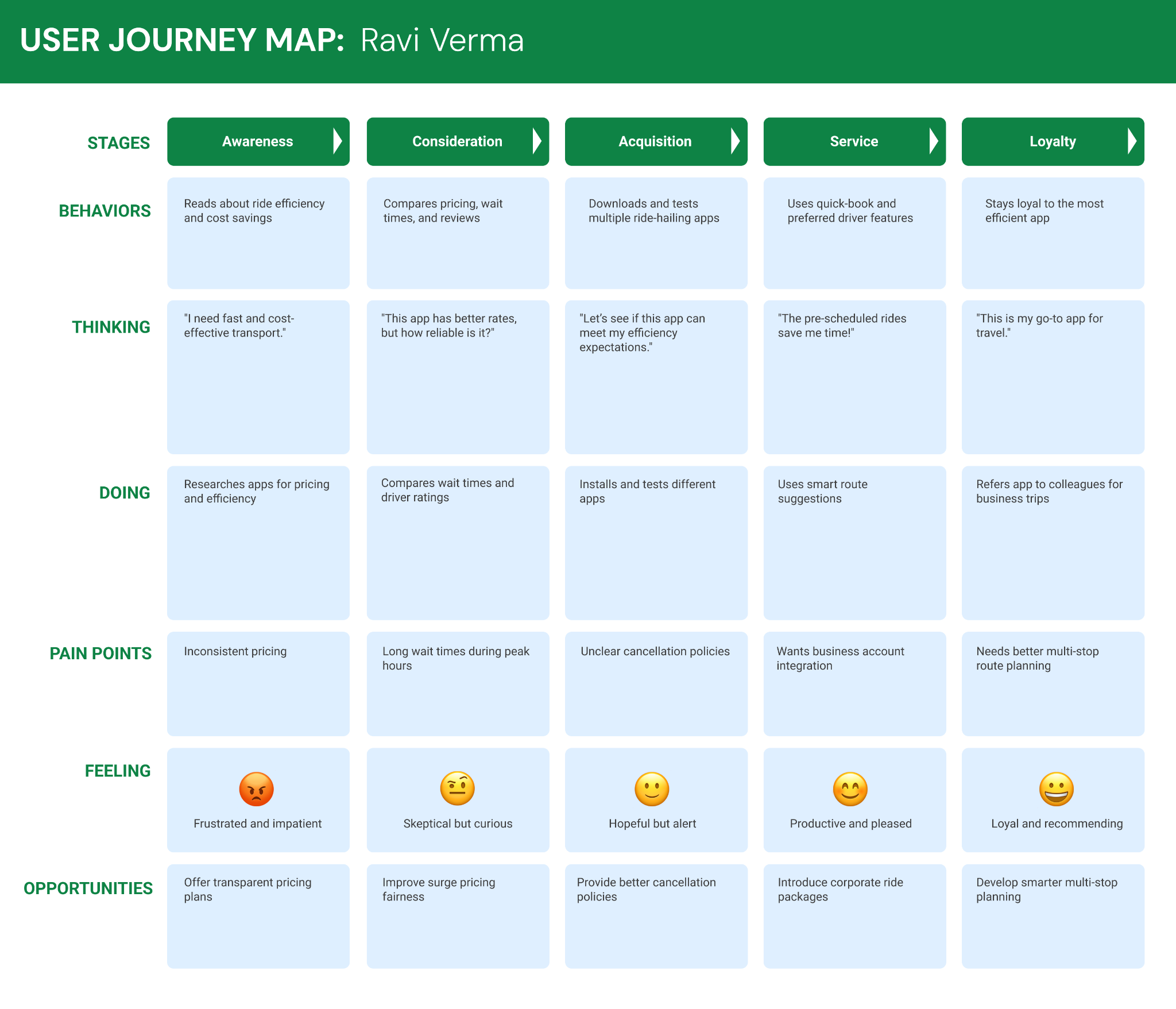
user personas & user journey map
ROHAN SHARMA (SOFTWARE ENGINEER)
MEERA KAPOOR (MARKETING EXECUTIVE)
RAVI VERMA (SALES MANAGER)
HOW MIGHT WE?
How might we make carpooling more accessible and convenient for users, ensuring a seamless and trusted experience?
OPPRTUNITIES
DESIGN SOLUTIONS
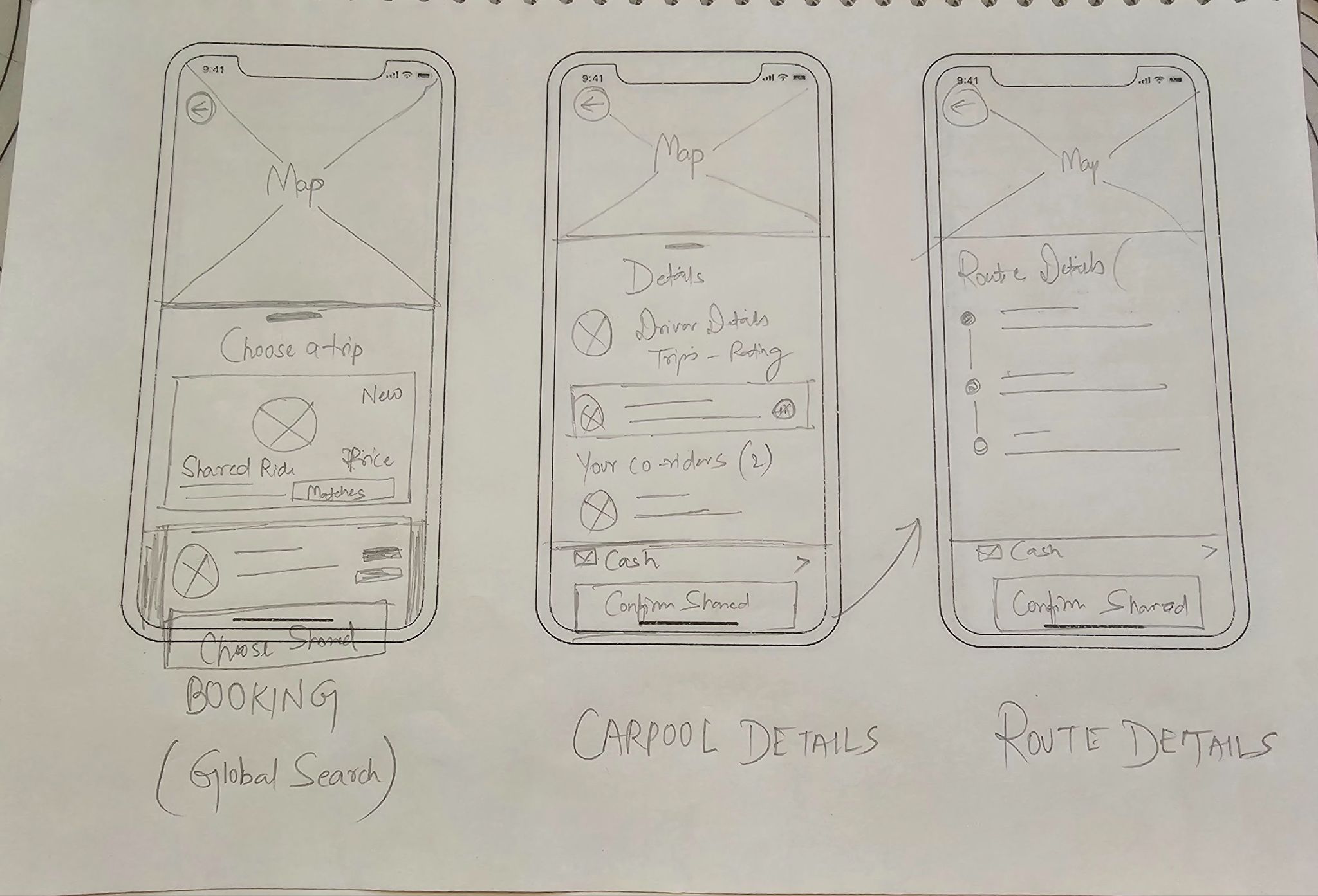
LOW FIDELITY DESIGN ON PAPER
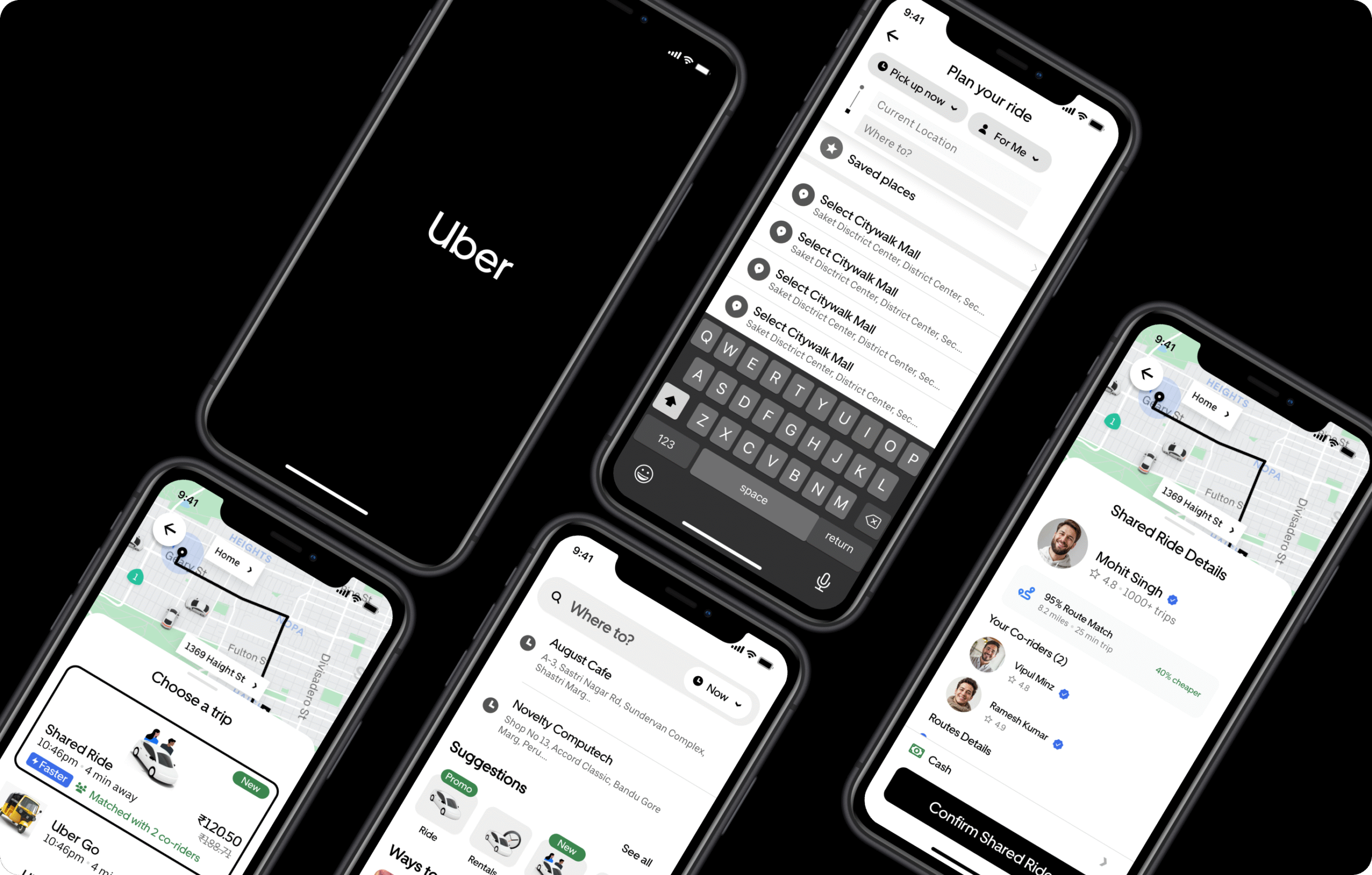
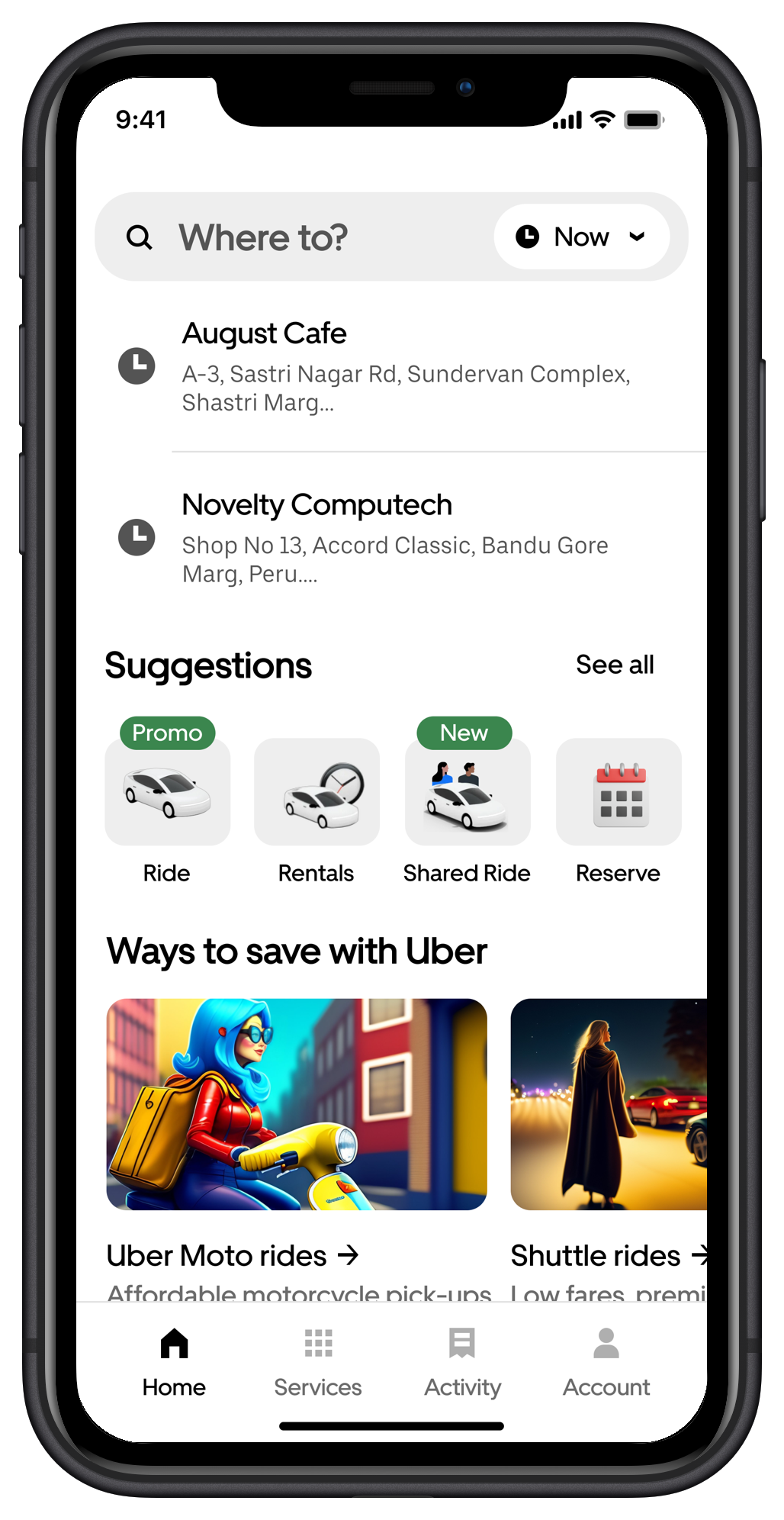
FEATURE 1 - Add Shared Rides (Carpooling) to the Home Page
Loading Screen (Existing)
Introducing Shared Ride
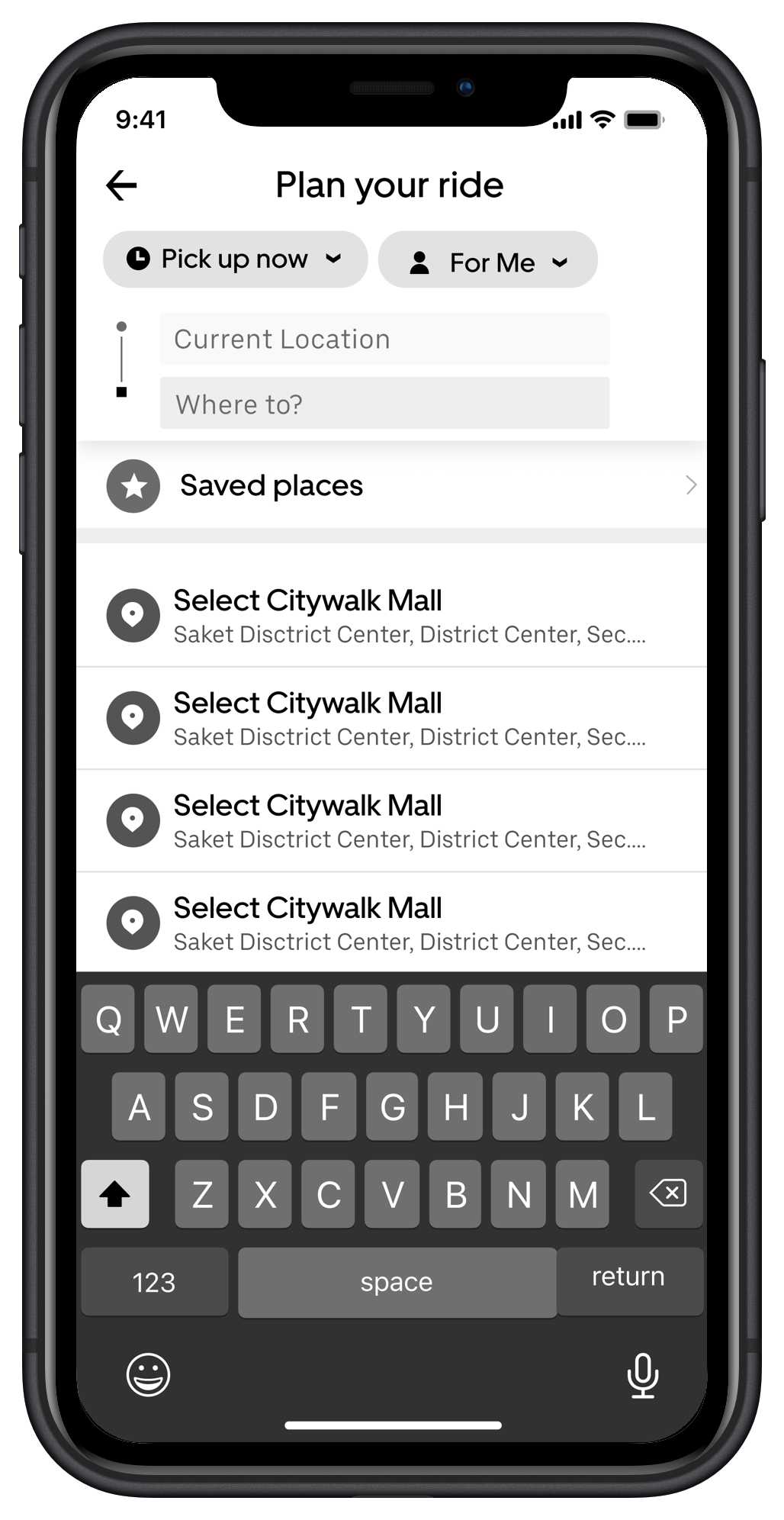
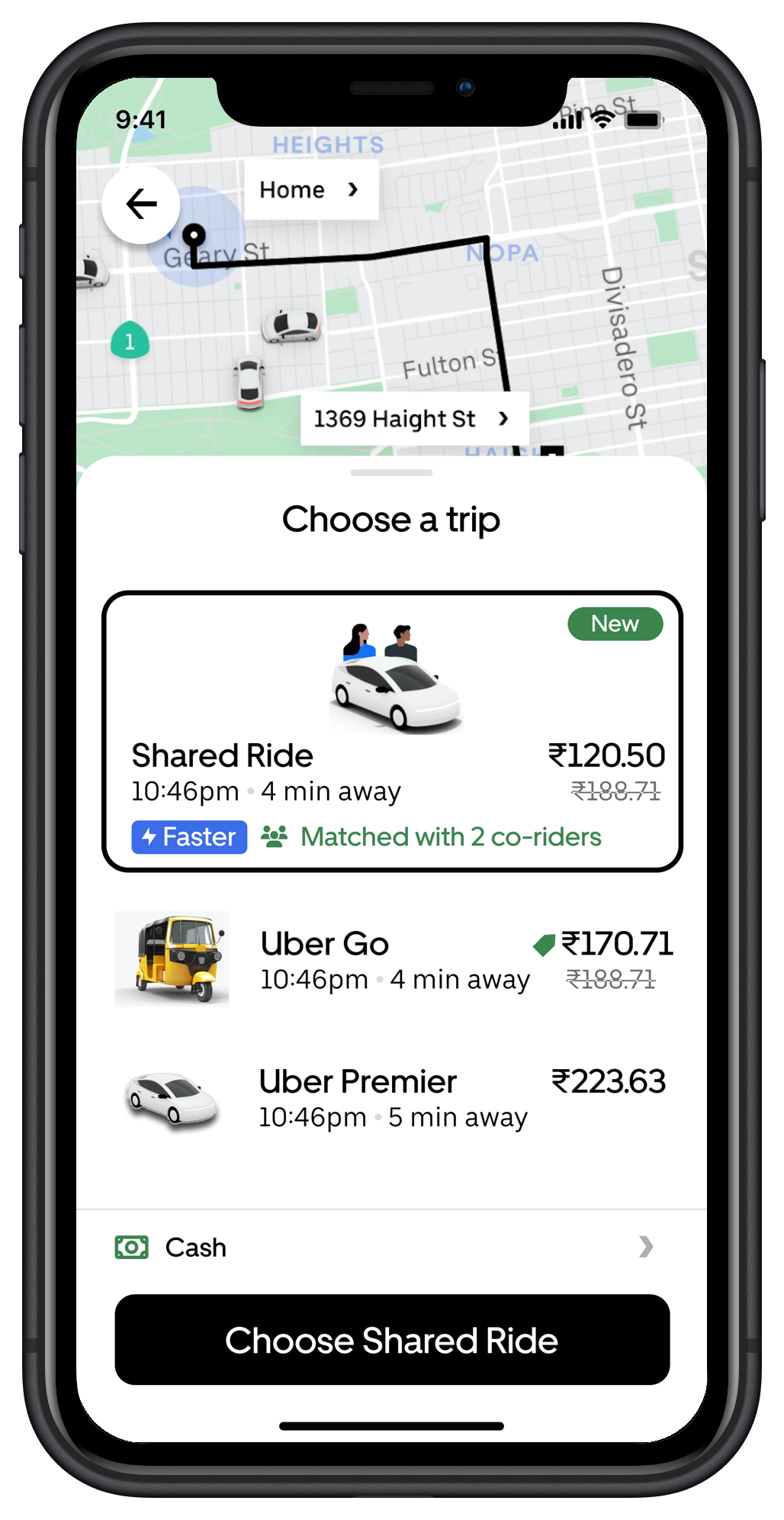
FEATURE 2 - Pre-Booking and Instant Matching
Users can pre-book rides by selecting destinations and saved locations.
Instant ride matching with fare and passenger details.
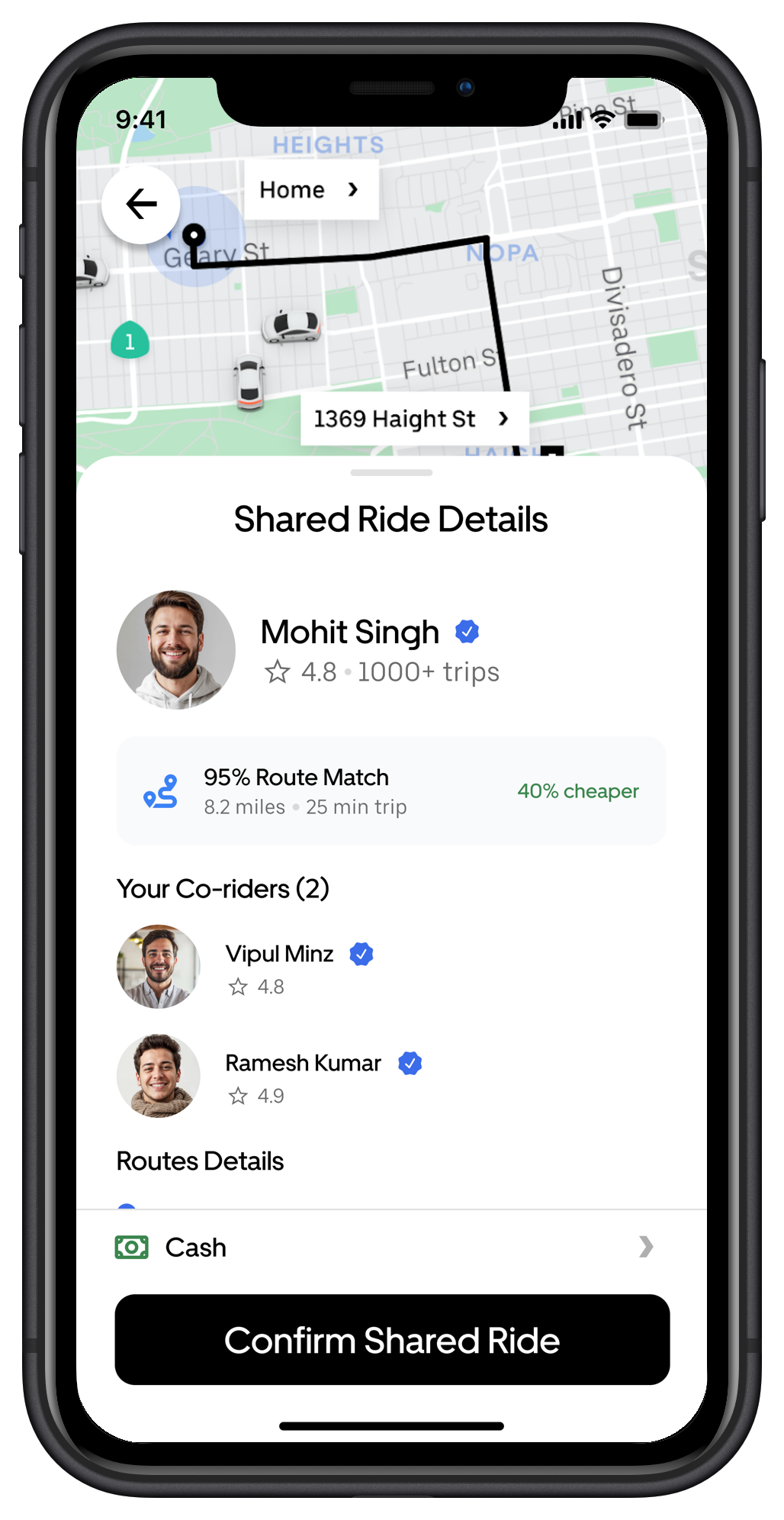
FEATURE 3 – View Co-rider Profile & Ratings Before You Book
Get Matched Instantly with Complete Fare, Passenger & Route Info
Co-Rider details with Route and Trip Details
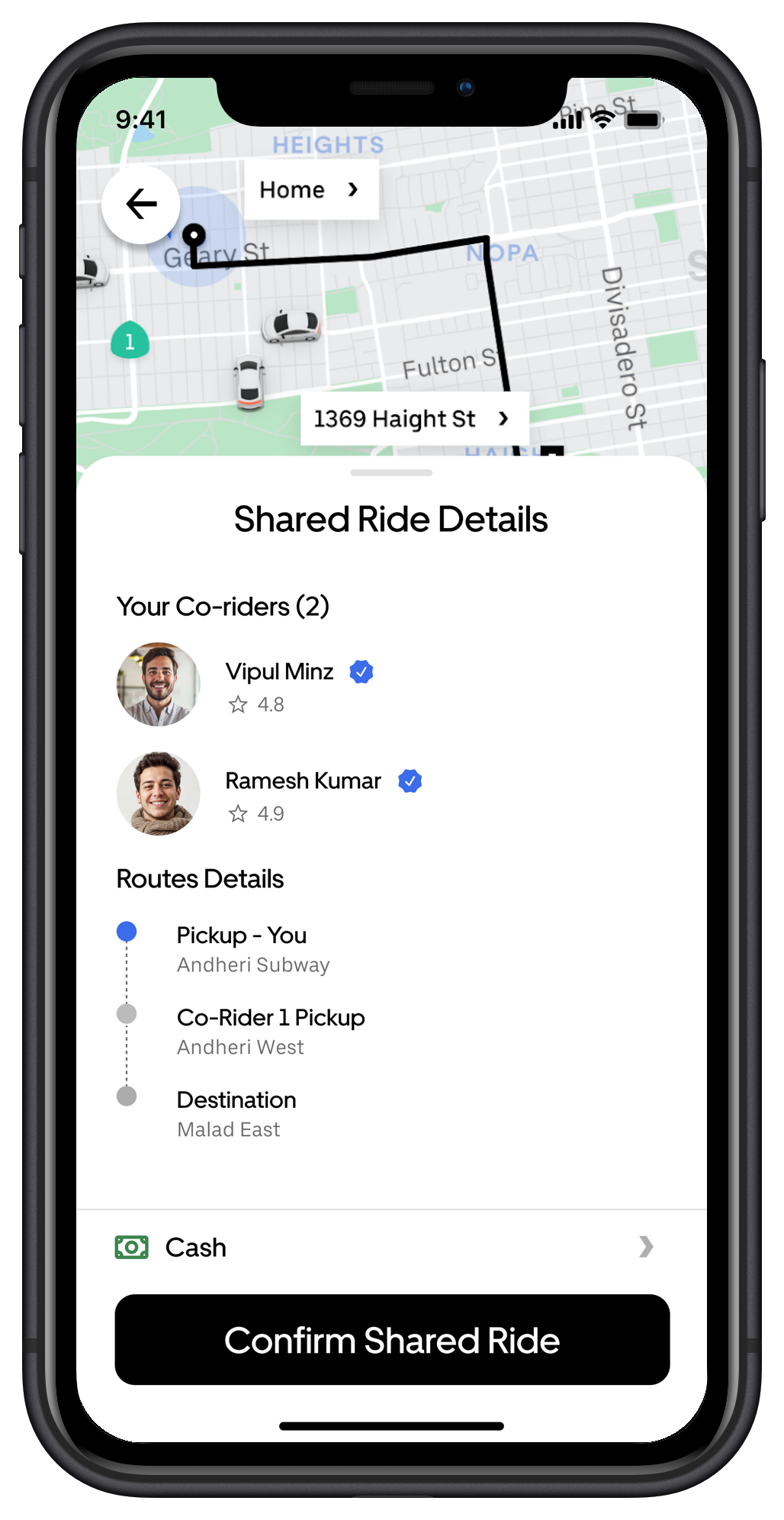
FEATURE 4 – Route Details
Co-Rider details with Route and Trip Details
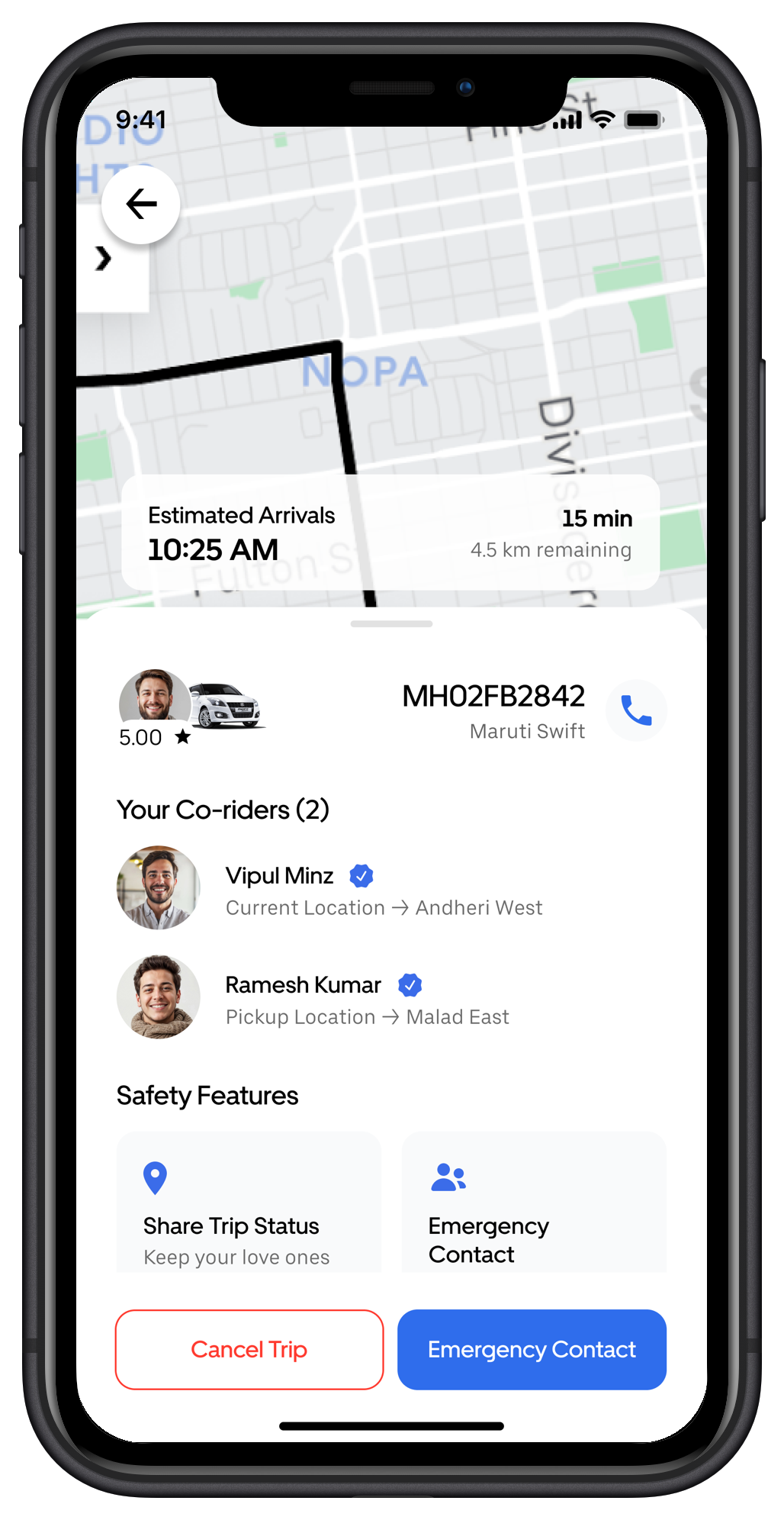
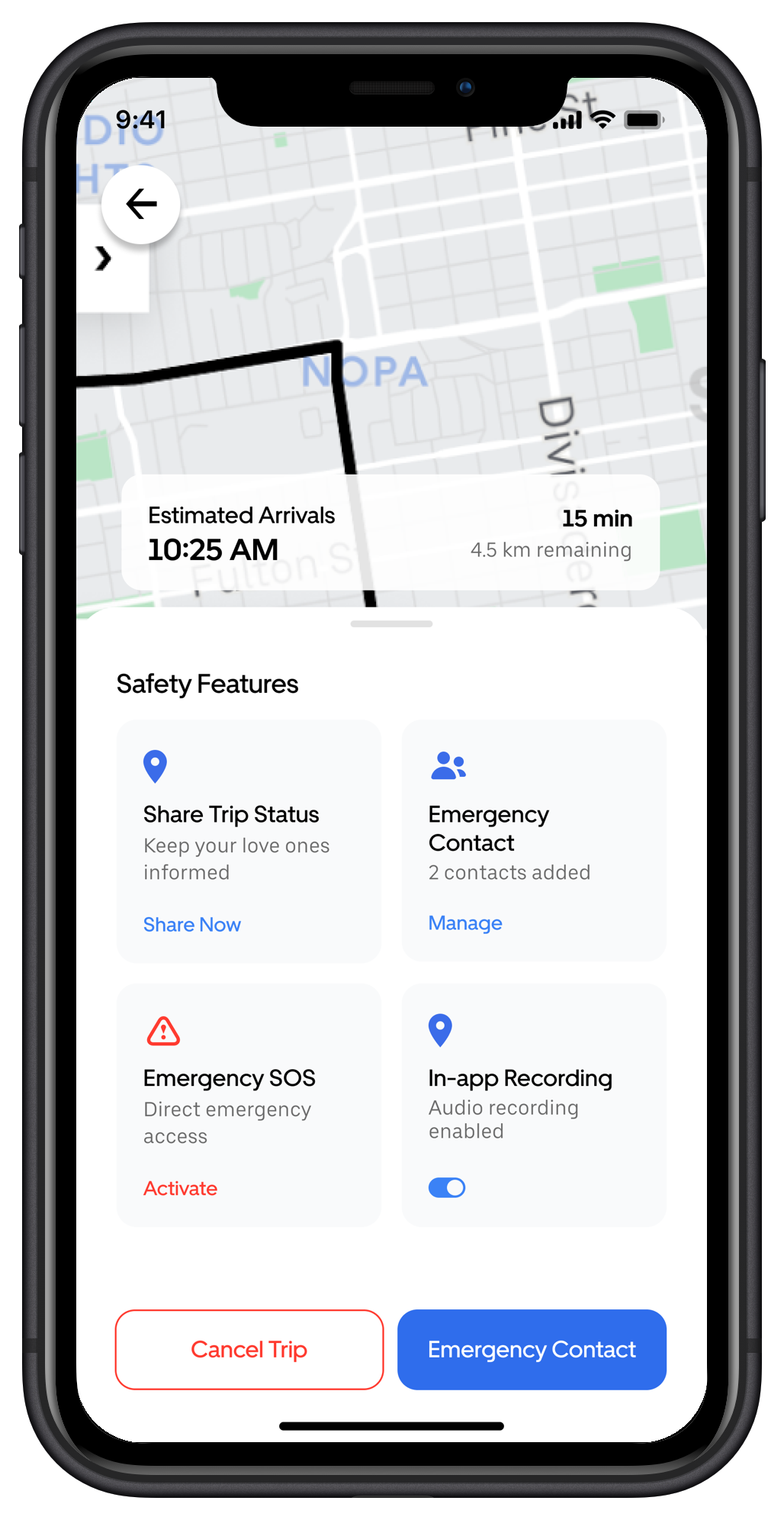
FEATURE 5 – Safety Concerns
Co-riders Destination and Estimated Arrival Details
Safety Features for Users
FINAL PROTOTYPE
FUTURE STEPS
PRODUCT FEATURES
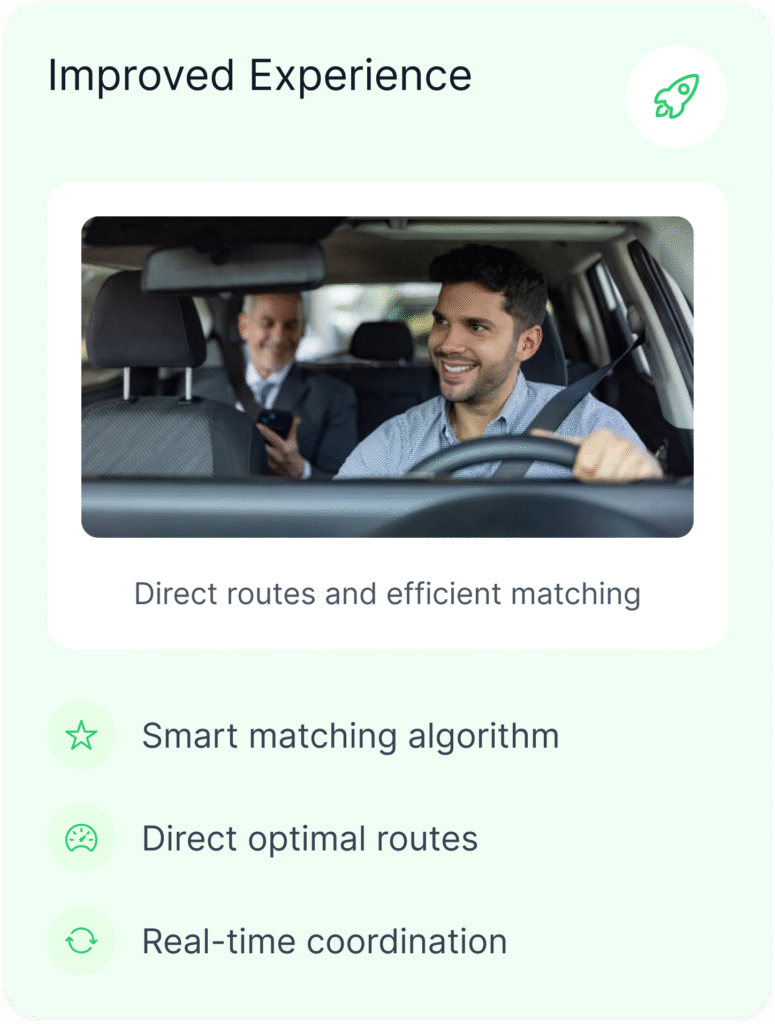
Optimize ride-sharing by grouping users with minimal detours and shorter wait times.
Ensure at least one female co-rider when a woman books a shared ride.
Enable in-car recording for enhanced security during shared trips.
Show live co-rider locations, ETAs, and trip modifications.
Display dynamic fares based on shared distance and stops.
Introduce mandatory profile verification with government ID and driver’s license checks.
DESIGN improvements
Implement dynamic notifications to keep users informed about ride statuses, co-rider updates, and any changes in real-time.
Introduce detailed post-ride feedback options, allowing users to rate various aspects of the ride, enhancing service quality.
Incorporate safety measures such as in-app emergency buttons, real-time ride tracking, and verified user profiles to build trust among users.
Add gamification features like rewards, badges, and leaderboards to encourage user engagement and promote a community-driven platform.
Add Add a new section on the homepage for “Private Vehicle Carpool” alongside existing ride-hailing options.features like rewards, badges, and leaderboards to encourage user engagement and promote a community-driven platform.
KEY METRICS
Ride Matching
Match Rate (%) – Percentage of ride requests successfully matched with co-riders.
Average Wait Time – Time taken to match and assign a shared ride.
Seat Utilization Rate – Percentage of available seats filled per ride.
Pricing & Revenue
Average Fare per Shared Ride – Revenue generated per carpool trip.
Cost Savings for Riders – % difference between carpool fares and solo rides.
Driver Earnings per Shared Trip – Earnings per ride compared to regular trips.